
Amsterdam bridges at a glance
Amsterdam bridges are part of the picture on almost every canal. They link the narrow streets between the water, they frame the views along the Prinsengracht, Herengracht and Keizersgracht, and several of them are landmarks in their own right. One landmark is the Skinny Bridge, called the Magere Brug in Dutch, which crosses the Amstel. The stone Blauwbrug spans the same river.
You do not need a ticket to see any of them. A bridge is a place to stop, look along the water and take a photo. If you want the view from below, a canal cruise passes under many bridges in a single trip, and an evening cruise shows them after dark.
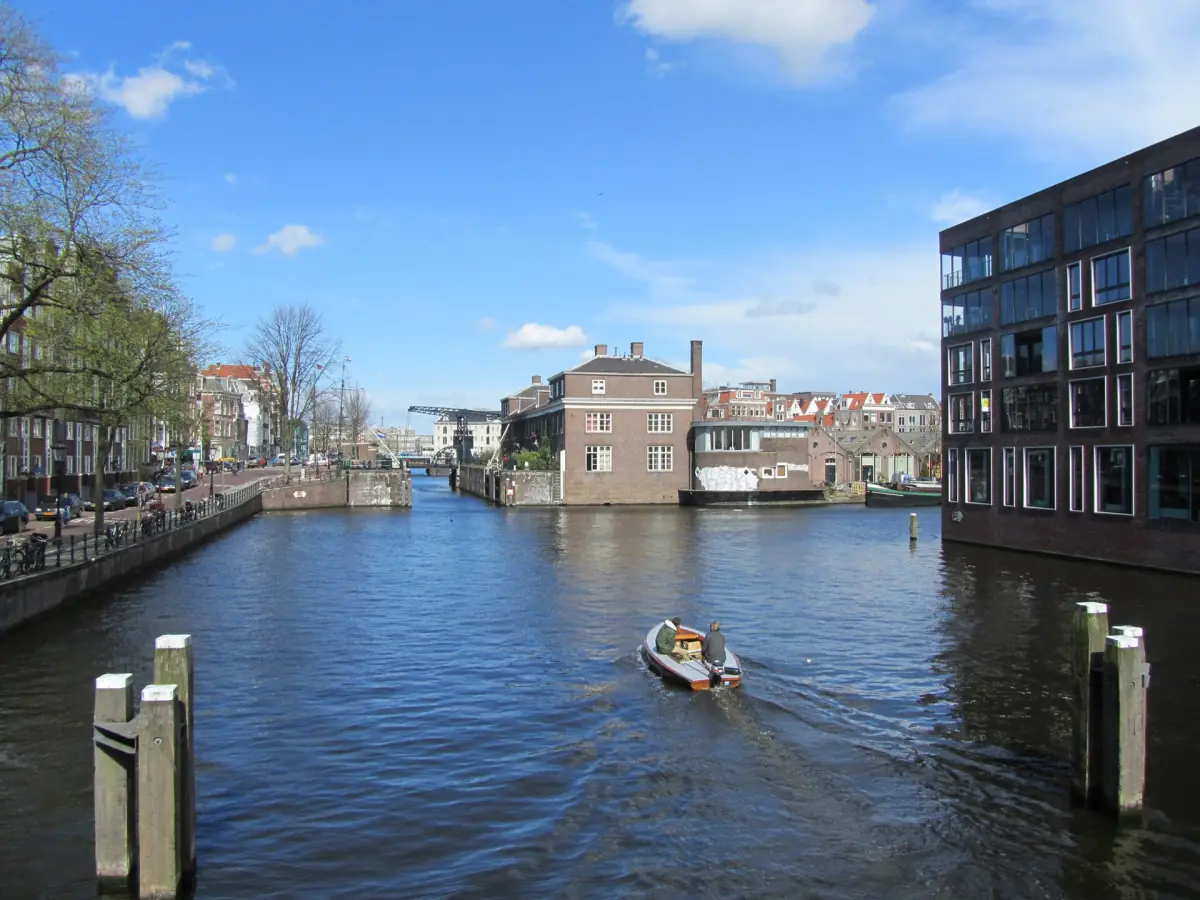
Our pick: a cruise that passes the Magere Brug
The route of this covered saloon boat takes in the Magere Brug.
Hand-picked tours, booked through GetYourGuide. Prices are indicative starting prices in euros (as of October 2026). Tap a tour for live availability and the current price in your currency.
Canal cruises and boat tours in Amsterdam
See Amsterdam's bridges from the water on a day, evening or open-boat canal cruise, with live prices and availability.
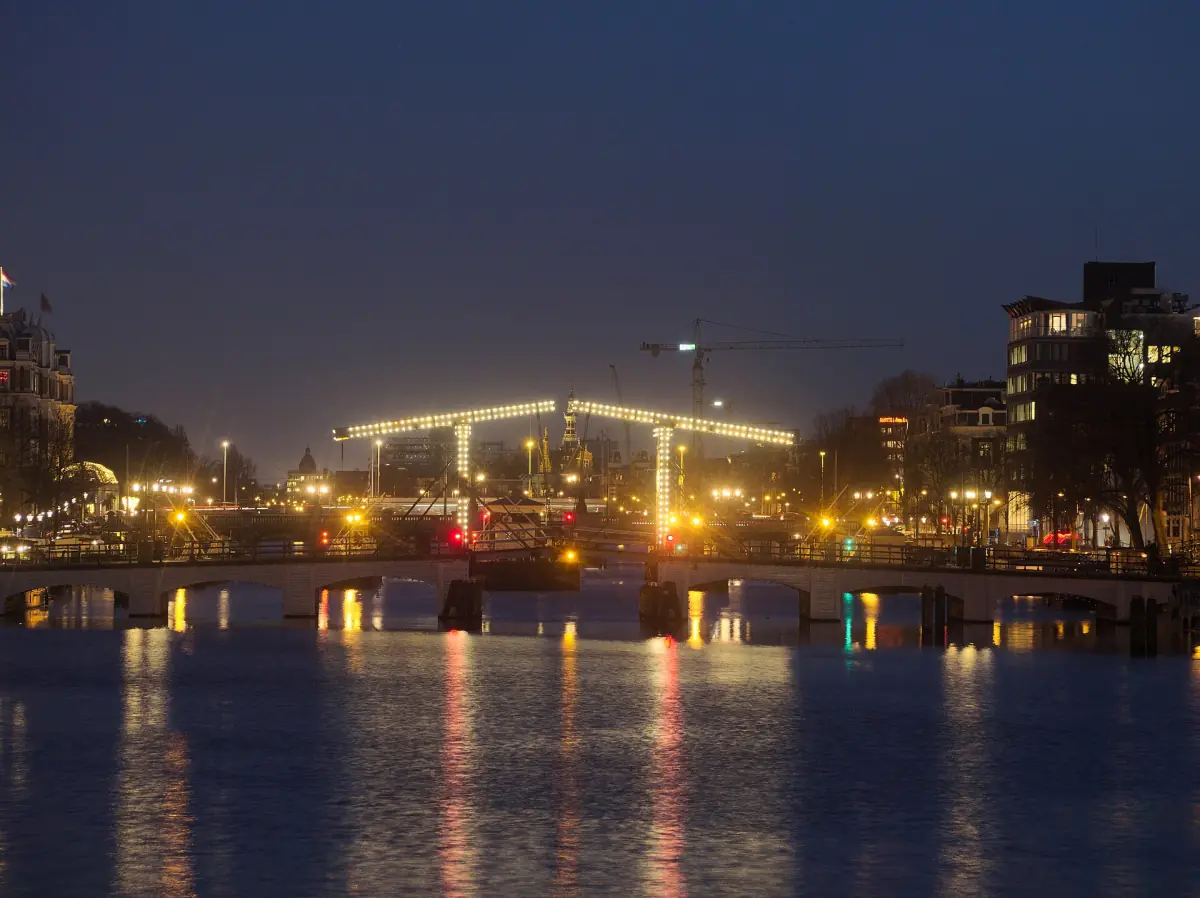
Magere Brug, the Skinny Bridge
The Magere Brug is a white wooden double drawbridge over the Amstel. It connects Kerkstraat and Nieuwe Kerkstraat and carries the registered bridge number 242. The first bridge on this spot goes back to the 17th century, between about 1640 and 1670.
The bridge was altered in 1840 and 1871 and renewed in 1934 to a design by P. L. Kramer. What you see today is therefore a rebuilt bridge on a very old crossing.
The bridge is often photographed in the evening. Lighting hours are not fixed, so look at it on the evening you are there rather than planning a trip around a time.
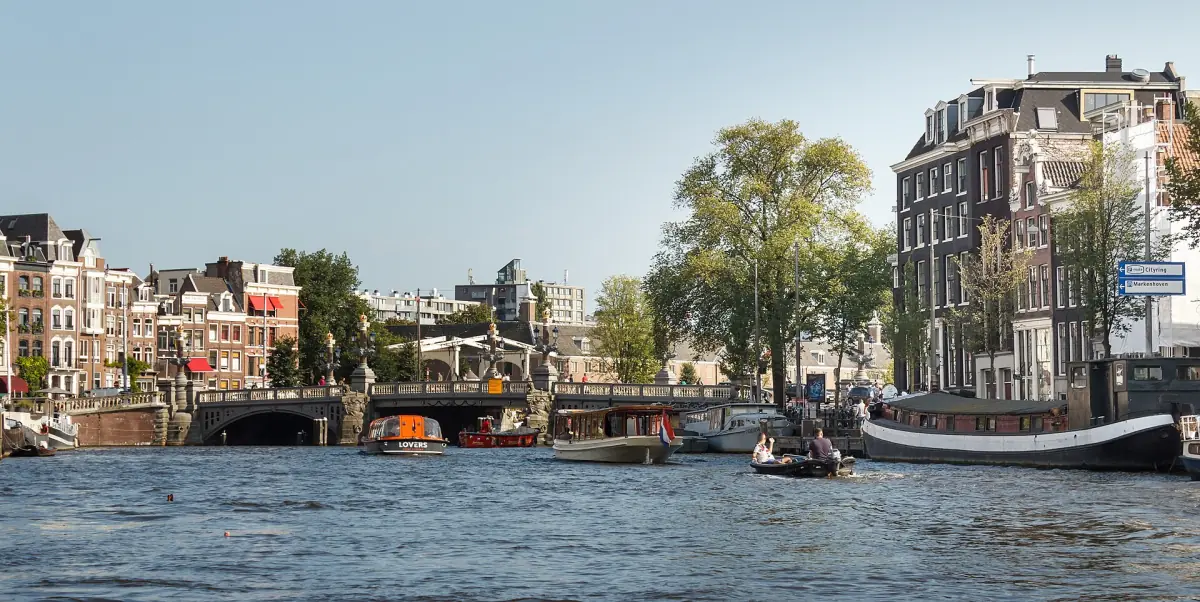
Blauwbrug over the Amstel
The Blauwbrug is a stone bridge over the Amstel. Its design was inspired by bridges over the Seine in Paris and is credited to De Greef and Springer. It replaced a wooden predecessor.
The bridge was rebuilt more than once, and its building phases are dated between 1839 and 1938.
A walk along the Amstel links the two bridges. Start at the Skinny Bridge, follow the river and look back at each crossing from the next one.
How many bridges does Amsterdam have?
The honest answer is a range.
More than 1,000
Counts of the city's bridges start at more than 1,000.
Around 1,200
Other counts give around 1,200 bridges today. Both figures are rounded.
Why there is no exact number
A count depends on what you include: footbridges, road bridges, railway bridges and movable bridges. Without a clear definition, any exact number is a guess.
The original canal plan
The historic expansion of the canal ring included 14 km of canals and 80 bridges. That figure describes the original plan, not the city as it is today. Read more in our history of the canals.
Where to see bridges and canal views
You can see Amsterdam bridges well on foot. Cross a bridge, stop in the middle and look both ways: the preserved lines of gables on each side of the water are a big part of why the canal ring is a World Heritage site. The canal ring guide explains the layout, and the Herengracht page and Prinsengracht page cover two of the main canals, with many bridges along them.
The Jordaan guide adds a neighbourhood walk with more canal crossings.
One safety point applies to all bridges. The police do not allow swimming in the fairway or near bridges, locks and waiting places.
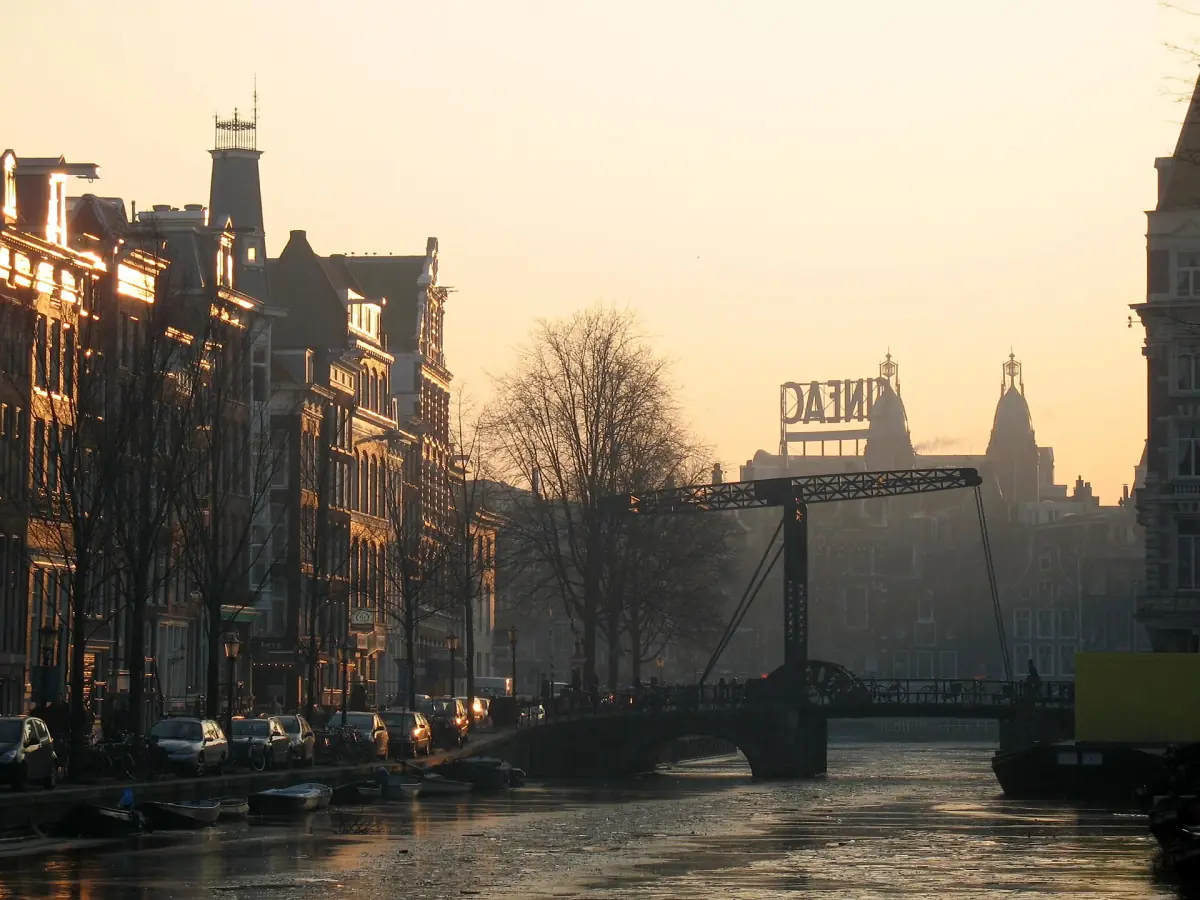
Plan the rest of your visit
More guides on the canal ring.
Amsterdam bridges: frequently asked questions
What is the Skinny Bridge in Amsterdam?
It is the Magere Brug, a white wooden double drawbridge over the Amstel between Kerkstraat and Nieuwe Kerkstraat. Its registered number is 242, and the current bridge dates from a renewal in 1934.
How many bridges are there in Amsterdam?
More than 1,000. Some counts give around 1,200. The exact number depends on which kinds of bridge you include.
What is the difference between the Magere Brug and the Blauwbrug?
The Magere Brug is a narrow white wooden drawbridge. The Blauwbrug is a stone bridge inspired by bridges over the Seine in Paris. Both cross the Amstel.
When was the Skinny Bridge built?
A first bridge here goes back to the 17th century, between about 1640 and 1670. The bridge was altered in 1840 and 1871 and renewed in 1934.
Is the Skinny Bridge lit at night?
The bridge is often photographed in the evening. Lighting hours are not fixed, so look at it on the evening you are there.
Can I swim near the bridges?
No. Swimming is not allowed in the fairway or near bridges, locks and waiting places, because of boat traffic and hidden obstacles under water.